
'Career paths are no longer linear as professionals look to build a more holistic career portfolio that is true to their professional and financial goals.'

Any currency design change must be approved by the RBI central board and the central government.

Come December, India may have to re-evaluate purchases of Russian oil if a price cap on crude oil proposed by the US and the European Union (EU) comes into effect. That impacts nearly a quarter of India's oil purchases that come at a discount, helping limit marketing losses for India's state refiners and enabling New Delhi to manage inflation by freezing pump prices of motor fuels. In September, India imported 1 million barrels a day or 24 per cent of its overall imports from Russia, which became the biggest supplier of oil to India.
Russia dominated Saudi Arabia in oil supplies as the world's fastest-growing major economy for fossil fuels in October, relegating the Kingdom to third place. Iraq was India's top oil supplier, according to the data from Vortexa. Saudi Arabia's decline in India's oil market has coincided with Russia's rise, and ironically occurred amid growing diplomatic ties between Riyadh and New Delhi. Saudi Crown Prince Mohammed bin Salman Al Saud is visiting India this month to meet Prime Minister Narendra Modi.

Changes in global oil and gas rates matter more to India's economy than other major economies because the country imports around 87 per cent of its oil, half of its gas in the form of LNG, and over 60 per cent of its LPG.

The dreary, cold months from December to February may prove to be the undoing of many a nation as they grapple with sky-high fuel prices - a result of the Ukraine conflict and the pandemic. Many - Europe, South Korea, Japan, and China - will still pull through on the strength of their wealth or because of strong storage infrastructure. But India will have its back to the wall. Signs of liquefied natural gas (LNG) rates hitting new records this winter are already evident.

Only a few thousand chargers dot the Indian landscape, some in working condition, others not, with some held hostage to the power supply vagaries of local utilities, reports S Dinakar.

India always faces a Hobson's choice as far as feeding coal-fired generators goes - even if the government is reluctant to admit it. The country cannot do without shipping in the world's most polluting fuel from overseas. And it will continue to do so unless it decides to reduce demand by forcing citizens, farmers and businesses to live without electricity for part of the day, or use diesel generators to fire facilities.

India may see a structural shift in supplies of crude oil with Russia emerging as a key source of fuels, a development that reduces New Delhi's dependence on West Asian oil, gives Indian refiners better bargaining power with price-setter Saudi Arabia, and improves overall energy security. The unexpected surge in supplies of Russian crude in the last few months, unthinkable until the war in Ukraine, may also deliver other unforeseen gains such as boosting exports of refined fuels to Europe, which historically has counted on Russian shipments. India has jumped on to the bandwagon of opportunistic buying of Russian crude but if calibrated carefully, Urals crude can be a long-term asset for India refiners.

India has a history of jugaad, and retrofitting vehicles is one such manifestation of the legendary Indian skill. Not so long ago autorickshaws and small Marutis used to strap on subsidised LPG cylinders and power themselves to a cheap ride. There were the odd explosions, lives were lost, but the jugaad continued. Then compressed natural gas (CNG) was introduced in Delhi following a court order. Initially, customised CNG kits were fitted to conventional (internal combustion engine or ICE) autos cheaply, enabling commuting at less than half of what you would cough up for diesel. The industry is better organised now with Suzuki and Hyundai designing CNG-fired vehicles, and Mahindra and TVS manufacturing liquefied petroleum gas (LPG)-powered three wheelers.

India's jugalbandhi with coal and clean energy is coming unstuck, neither achieving adequate renewable generation nor ensuring sufficient coal-fired power in the quest to become a $5-trillion economy. Six months have elapsed since Prime Minister Narendra Modi announced an ambitious climate agenda for India at COP26 at Glasgow. The net zero emissions target by 2070 is a distant one, but there are nearer-term plans to meet 50 per cent of energy demand with renewables by 2030 by increasing capacity to 450 Gw. A cursory look at the balance sheet of India's climate progress since November reveals ponderous progress towards meeting the renewables target even as the country is scrambling to expand coal-fired generation in the face of a power crisis.

Nearly a decade ago, the first fully electric vehicle (EV) caught fire on the road in the US. It was a model from Tesla, the world's most admired EV maker. A metal fragment punctured the underbelly of the vehicle, penetrating its battery pack, leading to a fire. Indian lawmakers and automakers have had nine years to study the incident (in fact, three Tesla Model Ss caught fire in two months in 2013) but seem to have learnt little.

'A patient visits for any other treatment, but a routine Covid test finds him to be positive.' 'Not only are they, but their whole family is also coming out to be positive.'
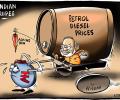
What could be more uncertain than Virat Kohli's agonising wait for a century for over two years? Perhaps it's what you will pay tomorrow morning to fill your vehicle's tank. Pump prices have joined cricket scores as the country's favourite discussion topic. Steep increases invite widespread protests, while moderate additions make the government anti-reformist. The ongoing fuel price conundrum is no different.

India's appetite for imported crude oil may wane in fiscal year (FY) 2023 from record levels in pre-pandemic 2019-20 fiscal as higher oil prices, a spillover from the conflict in Ukraine, and increasing use of biofuels affect domestic demand for petroleum products. Brent crude surged to a nine-year high, shy of a July 2008 record $147.50 a barrel, before declining to around $100 a barrel - but the volatility in commodity rates will slow global economic growth and use of fuels. Demand for all oil products may grow at only 2-3 per cent in FY23, slower than the current fiscal and nearly half the 5.5 per cent growth estimated by the petroleum ministry, according to industry officials.

'We now understand things that we have to correct.'

'Earning expectations remain strong.'

You can avail of tax deduction on expenses incurred on preventive health check-ups. This provision is beneficial to younger people who don't exhaust their Section 80D limit with their health insurance premium.
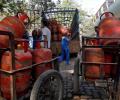
Finance Minister Nirmala Sitharaman cut fuel subsidies while slapping additional fuel taxes on unblended transport fuels in the latest Union Budget. The former will hit the rural poor, households that secured a subsidised LPG connection under the Pradhan Mantri Ujjwala Yojana (PMUY), a programme that was partly instrumental in helping the Bharatiya Janata Party (BJP) win the 2019 general elections. The latter will pretty much hurt the entire population after it kicks in from October. That's what it looks like. Or, perhaps, it's not as it appears to be, at least on the subsidy front.

India must be prepared for a big, fat fuel import bill in FY23 - barring any further avatars of the Covid virus - as refiners crank up runs, or crude processing rates, to meet the growing demand for fuels, and crude prices soar. Capacity additions by an Indian state-run refiner will reinforce the need for foreign crude. Demand for all fuels is expected to increase by 3-8 per cent next fiscal from 2021-22, reaching pre-pandemic levels, according to analysts and industry experts.
 © 2026 Rediff.com - Advertise with us - Disclaimer - Privacy Policy - Sitemap - Feedback - About us - Terms of use - Grievances